Managing Psychosocial Risk: Why Effective Controls Start with the Work
Your organisation may have identified psychosocial hazards, reviewed its policies or clarified how people can report a concern. Whether that work is well underway or only beginning, the practical question is the same: what needs to change in the way work is actually done? That starts with looking at what is creating or contributing to the risk.
Practical capability matters too, but it should support organisational controls that address the work itself, rather than asking people to cope with conditions the organisation could reasonably change.
Start with what is creating the risk
Psychosocial hazards arise from, or relate to, the design or management of work, the work environment, plant, or workplace interactions and behaviours. Safe Work Australia identifies examples including high job demands, low job control, poor support, lack of role clarity, poor organisational change management, violence and aggression, bullying and harassment.
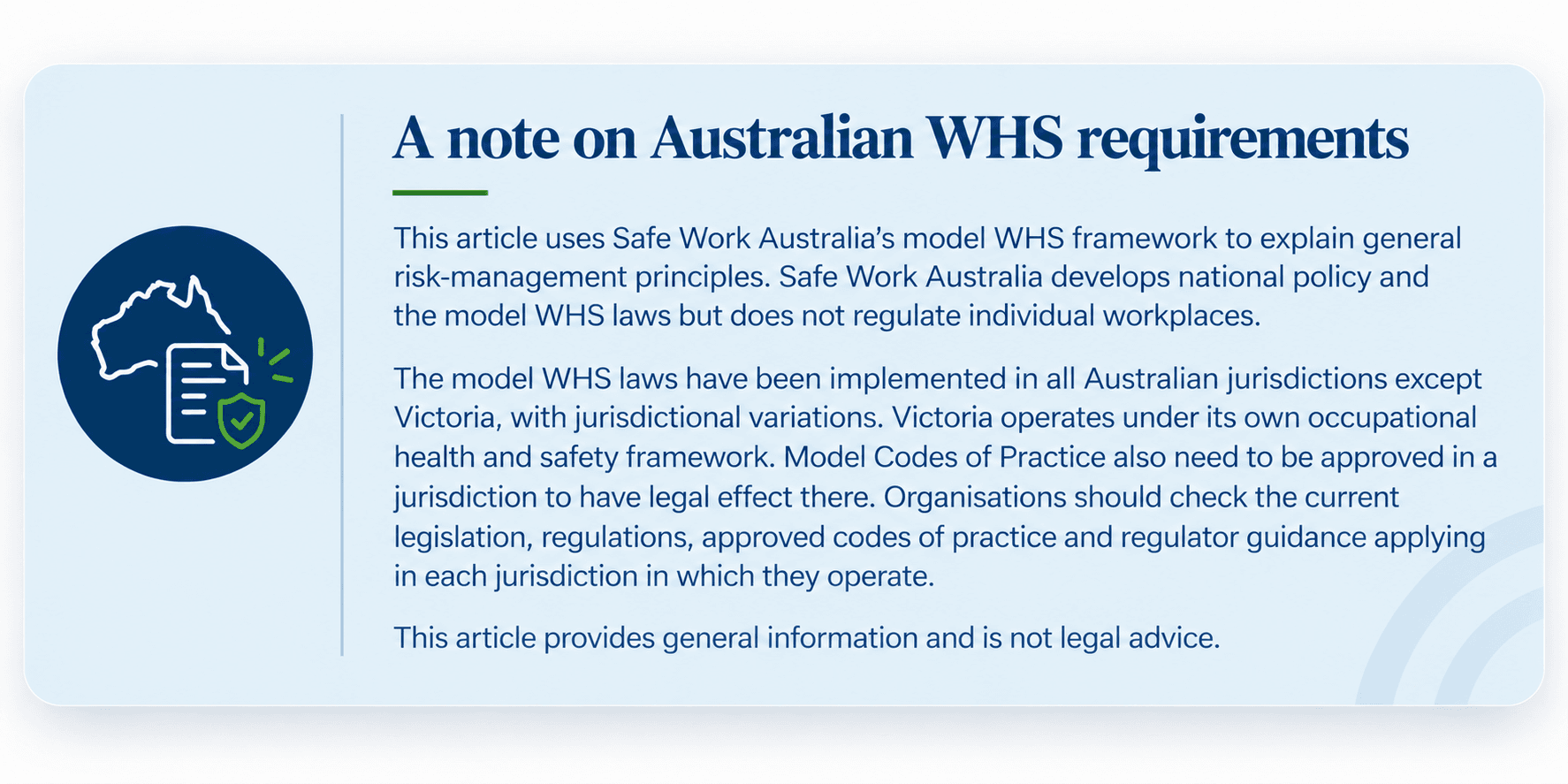
Under WHS laws, psychological health is part of health and safety. Organisations need to identify psychosocial hazards, assess the risks where necessary, eliminate those risks so far as is reasonably practicable and, where elimination is not reasonably practicable, minimise them so far as is reasonably practicable. Workers must also be consulted as part of managing WHS risks, and controls need to be reviewed to make sure they are working. Requirements vary between jurisdictions, so organisations should check the legislation, regulations, codes and regulator guidance that apply where they operate.
Consider sustained excessive workload. Time management, breaks and encouraging people to raise concerns may help, but they do not answer the underlying question: what is creating the workload? Staffing, work allocation, deadlines or competing priorities may be contributing.
This workload example shows how a business might identify contributing conditions, introduce controls and check whether they are working.
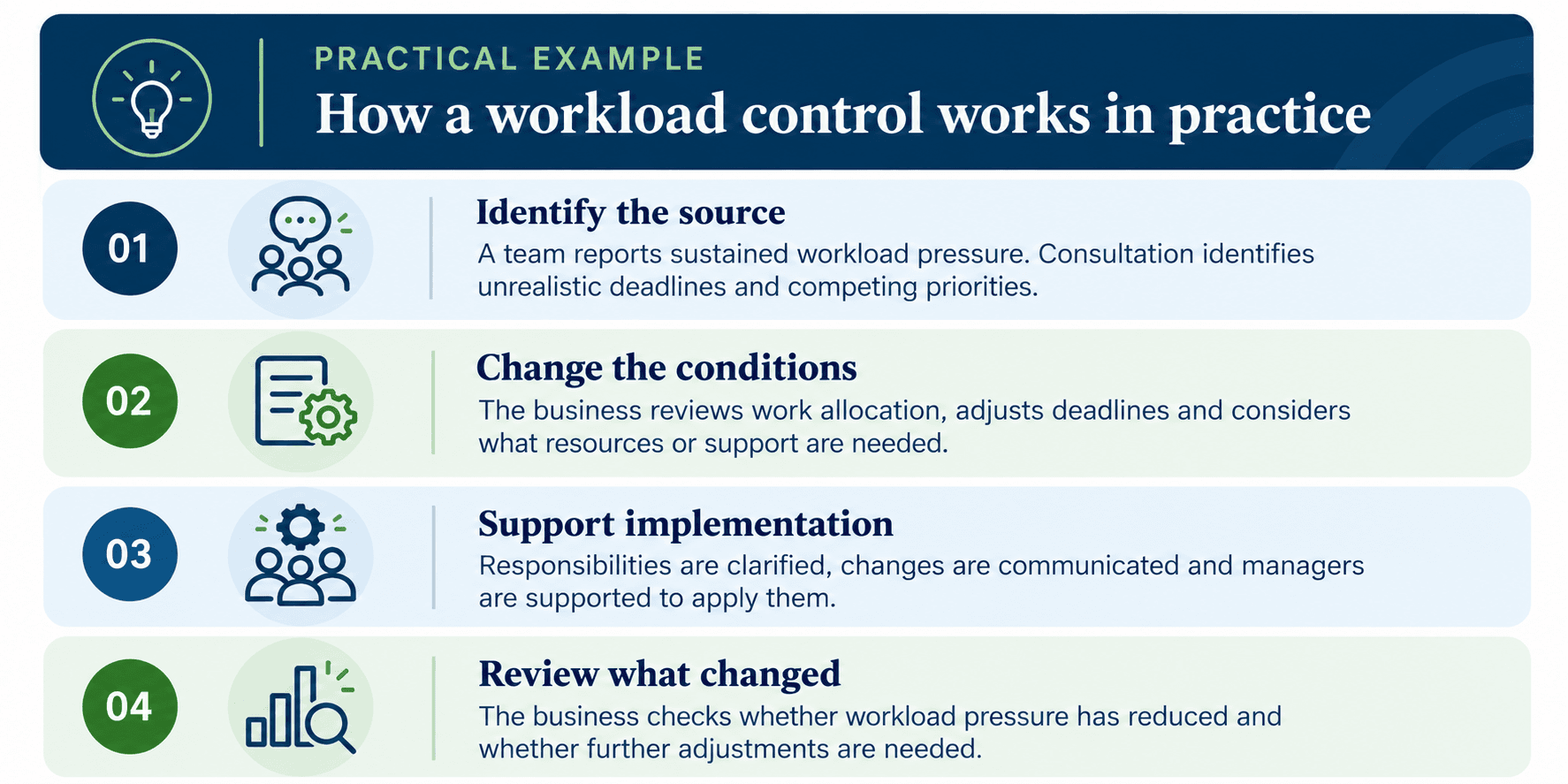
Work through four practical questions
The workload example illustrates a risk-management process. The following four questions focus on choosing and supporting practical controls. They complement, rather than replace, your organisation’s WHS risk-management process.
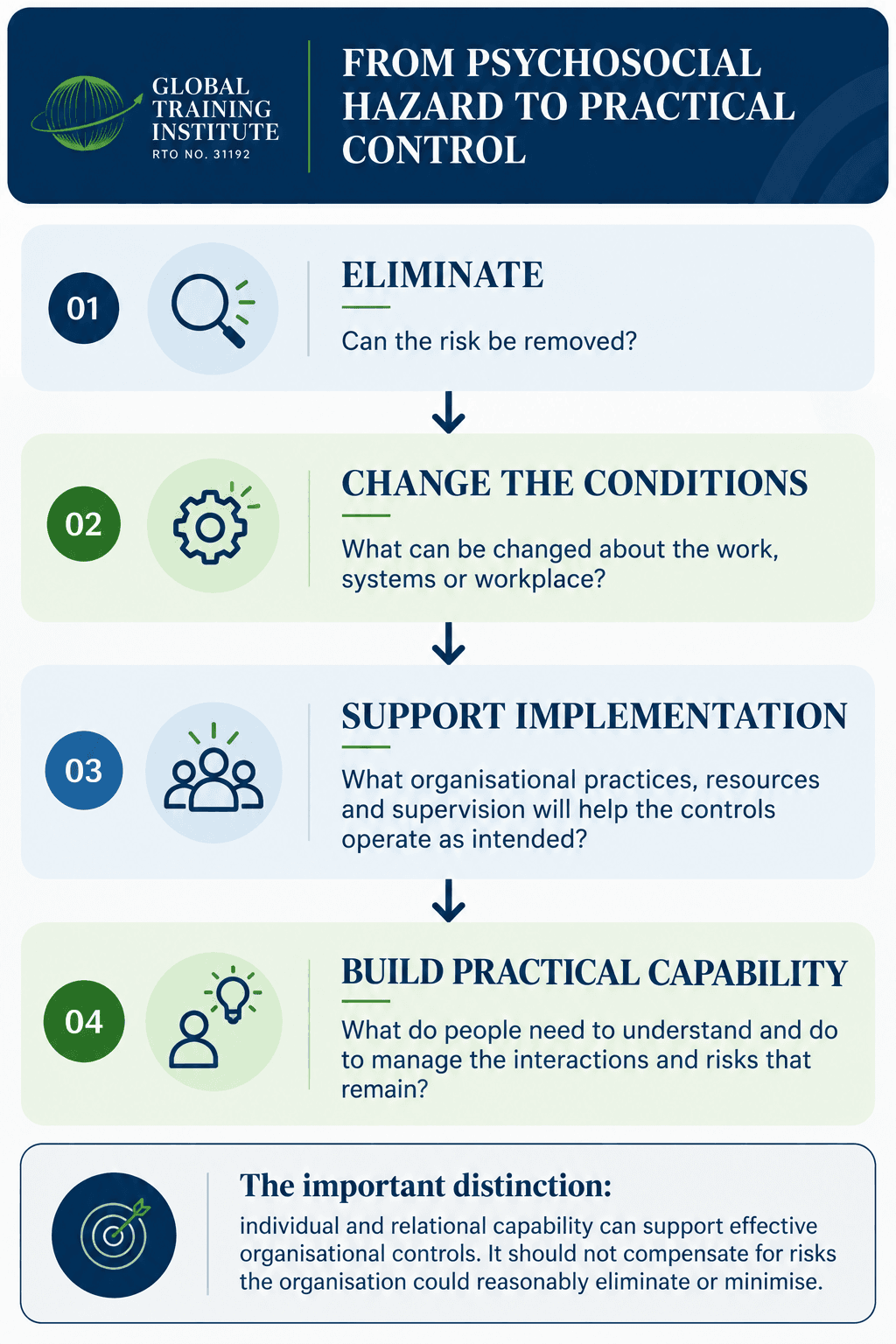
1. Ask whether the risk can be eliminated
Some difficult interactions, periods of increased demand or organisational change may be inherent in particular roles. Even then, leaders need to examine which contributing conditions can reasonably be changed to eliminate or minimise the risk so far as is reasonably practicable.
2. Change the conditions contributing to the risk
Look at how the work operates in practice. Depending on the hazard, that could mean examining workloads, staffing, resources, deadlines, decision-making authority, processes, role clarity, supervision, the physical environment or the way change is managed.
Consultation matters because workers often know where demand builds, instructions conflict or processes create unnecessary friction. Give affected workers an opportunity to contribute to decisions, consider their views and communicate the outcomes. Their experience can help leaders test whether a risk looks the same in practice as it does from a policy or reporting perspective.
3. Make sure the controls work in everyday practice
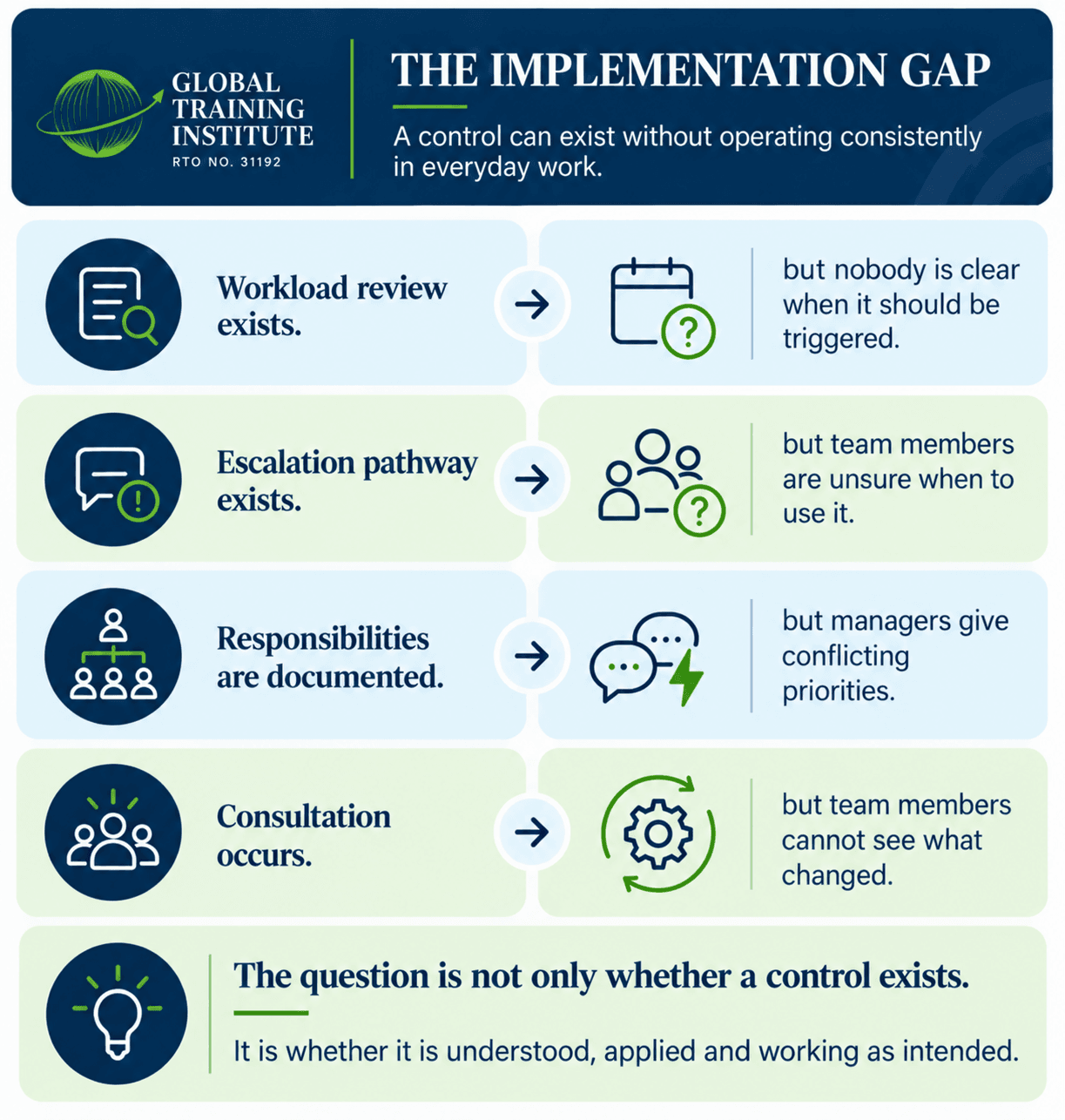
Designing a control and making it work are different tasks. Those implementing it need clear expectations, affected workers need to understand what it means for their work, and leaders need to know whether it is operating as intended.
Senior and operational leaders, HR/People and WHS teams may establish systems, resources and expectations, while managers and supervisors often translate them into everyday decisions about priorities, workloads, communication and supervision. That does not transfer the organisation’s WHS responsibilities to supervisors. It means they need enough clarity and support to carry out their part consistently.
The implementation gap becomes clearer when we look at controls that exist on paper but are not consistently understood or applied in practice.
Effective implementation also depends on how responsibilities, support and information connect across organisational levels, as the following diagram illustrates.
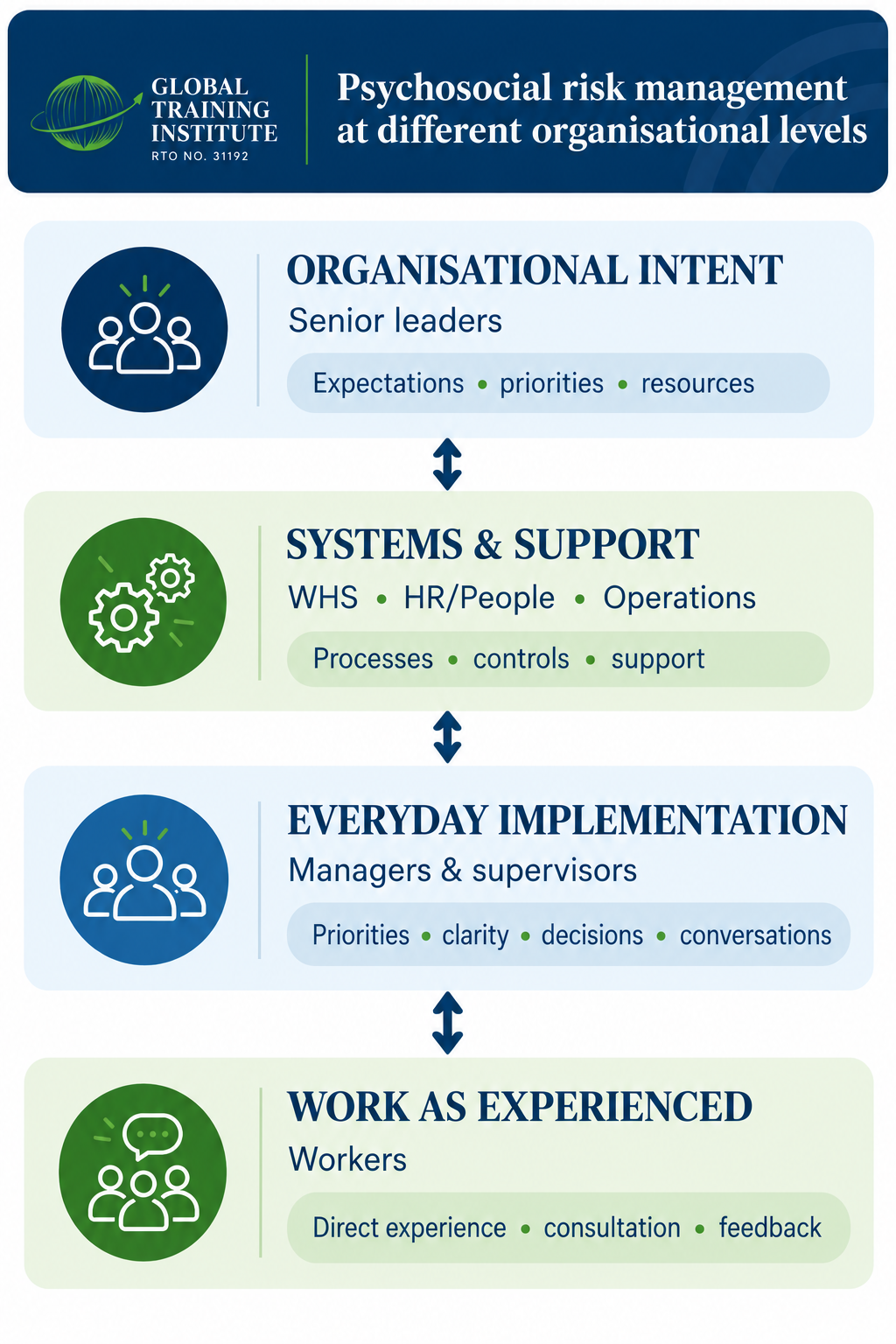
Information needs to move both ways. Expectations and changes to controls need to reach the people doing the work, while information about what is happening in practice needs to make its way back to the people reviewing the risk.
That feedback helps leaders identify where a control may need further support or adjustment.
4. Build the practical capability that supports the controls
Even well-designed work involves changing priorities, misunderstandings and difficult interactions. People need the practical capability to communicate clearly, check understanding, clarify expectations, raise concerns and know when and how to escalate an issue.
Managers and supervisors also need to know what the organisation expects them to do when a control needs to be applied. They also need sufficient clarity, support and authority to do that consistently.
Where a manager or supervisor identifies a risk but cannot make the necessary change, the issue needs to reach someone with the authority and resources to consider and address it.
Practical capability supports organisational controls; it cannot replace controls that could reasonably eliminate or minimise risks at their source.
Psychosocial hazards can interact, so controls may need to work together. High workload, for example, may create greater risk where people cannot take breaks or access help.
Check what has actually changed
Controls need to be reviewed to check whether they are working as intended, whether circumstances have changed or whether new risks have emerged. The WHS framework also specifies circumstances in which review is required.
A control may be applied consistently without reducing the risk. For example, regular workload reviews may achieve little if necessary changes to deadlines, work allocation or resources do not follow.
For a workload issue, this might include reviewing working hours, workload distribution and whether people can access breaks and support.
Consultation, workplace observations, organisational information, reports, complaints and grievances can all help show what is happening in practice. The evidence you need will depend on the hazard and the control, but the question is consistent: has this changed the conditions that were creating or contributing to the risk? If it has not, the response may need to change.
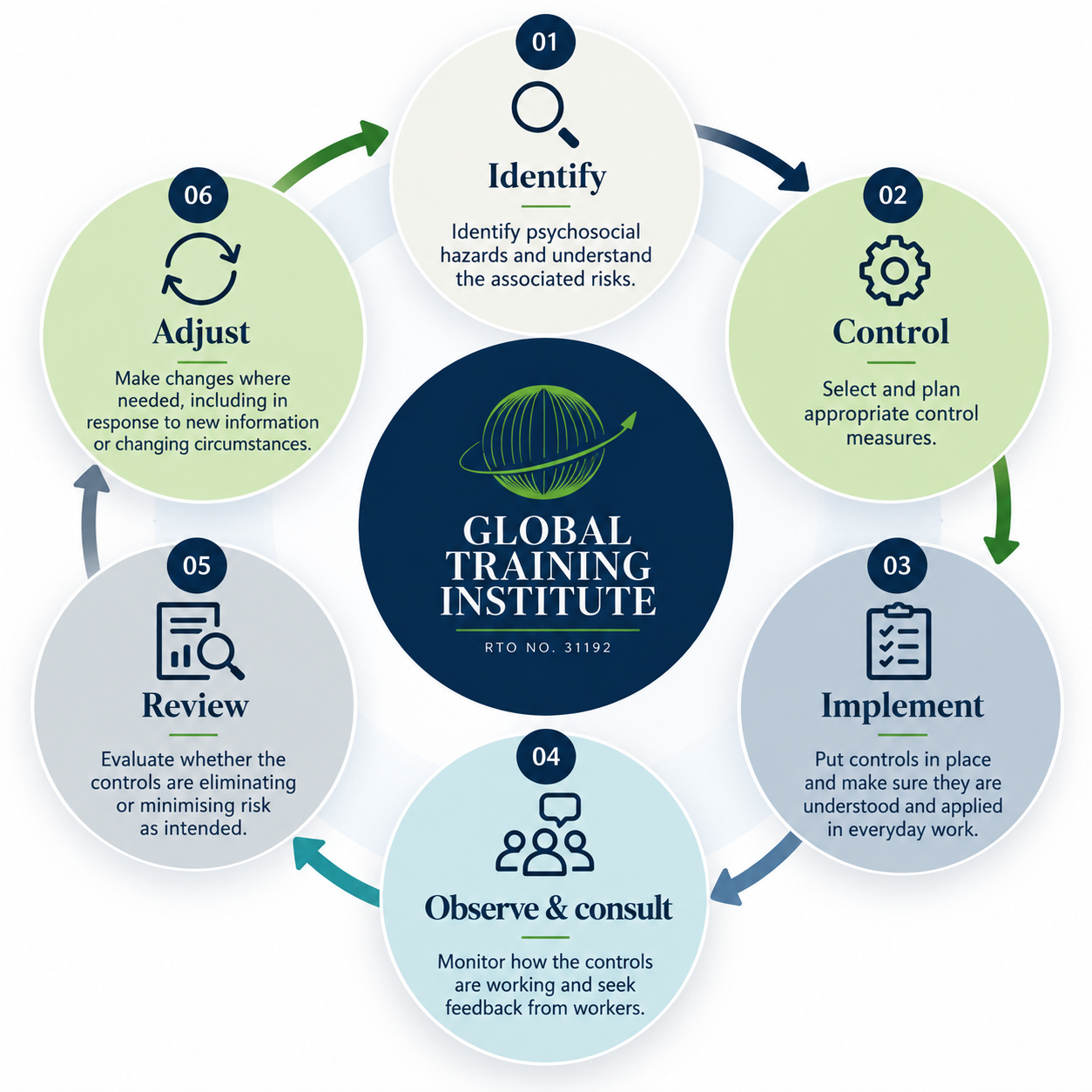
The cycle below shows how identifying hazards, implementing controls, consultation and review inform ongoing adjustments.
Make the work the starting point
The harder test comes after a psychosocial hazard has been identified. Start with the source and the conditions contributing to the risk. Change what can reasonably be changed, make sure organisational controls work in practice, then give people the practical capability to support those controls.
The aim is not to make people better at coping with avoidable risk. It is to change the conditions creating that risk and make sure the controls work in everyday practice.
References and further reading
Reviewed: October 2026